Puerh Tea
Pu-erh (Puer, Puerh) is a variety of fermented chinese tea, produced in Yunnan, China and named after the city. Fermentation in the context of tea production involves microbial fermentation and oxidation of the tea leaves, after they have been dried and rolled.
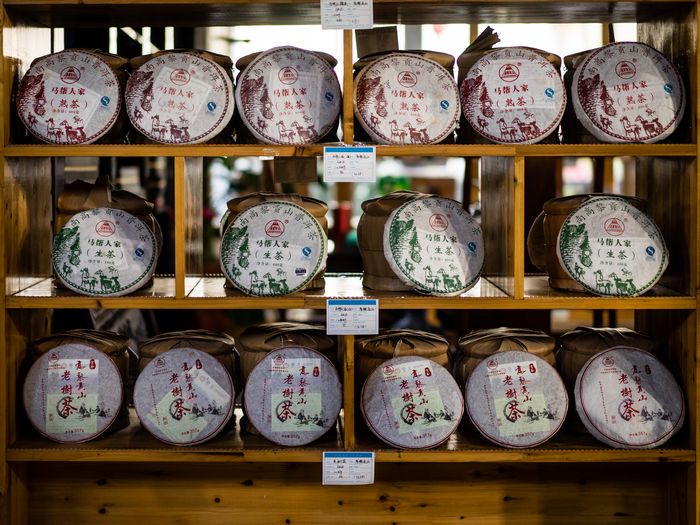
Pu-erh traditionally begins as a raw product known as "rough" máochá (毛茶) and can be sold in this form or pressed into a number of shapes and sold as "raw" shēngchá (生茶). This way it was sold and stored historically in ancient China. But in 1973 the Kunming Tea Factory developed fast fermetation process, creating new type of Pu-erh tea: This process involves an accelerated fermentation into "ripe" shúchá (熟茶) which is then stored loose or pressed into various shapes. Al, but Raw pu-erh benefits much more from the aging process. types of pu'er can be stored to mature before consumption, which is why it is commonly labelled with the year and region of production, but Raw pu-erh benefits much more from the natural aging process.
Pu-erh is generally expected to be served Gongfu style. Optimum temperatures are generally regarded to be around 95 °C for lower quality pu-erhs and 85–89 °C for good ripened and aged raw pu-erh. The tea is steeped for 12 to 30 seconds in the first few infusions, increasing to 2 to 10 minutes in the last infusions.